31- Sybil Leek (February 22, 1917 – October 26th, 1982)
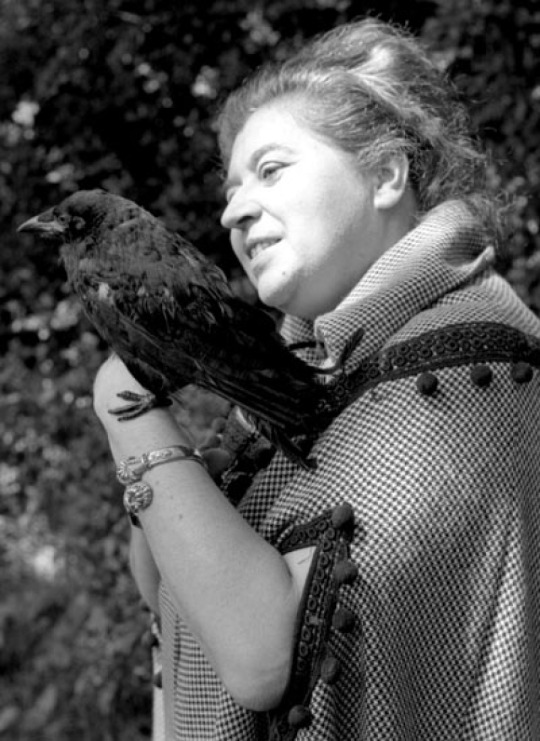
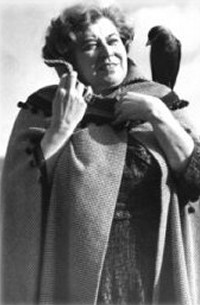
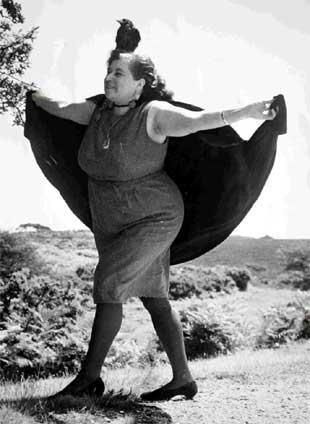
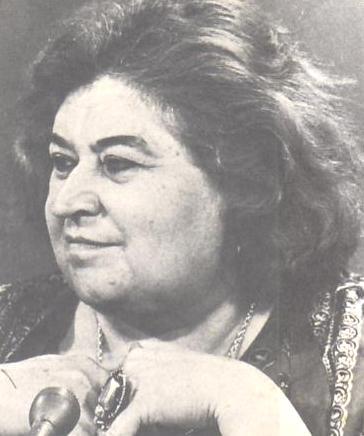
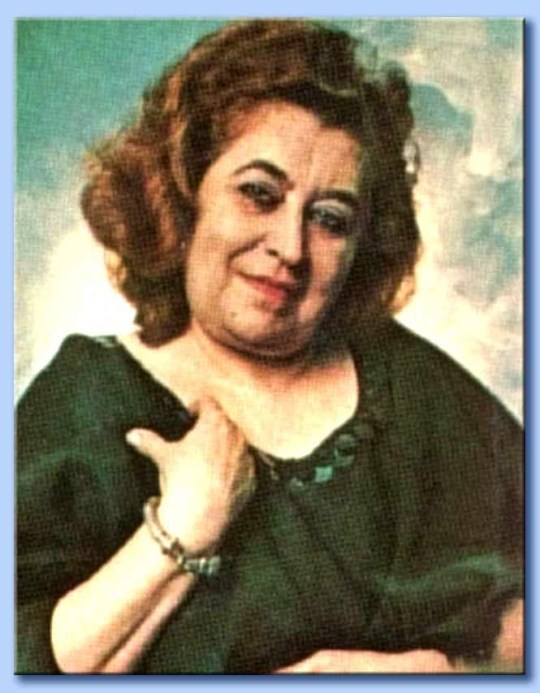
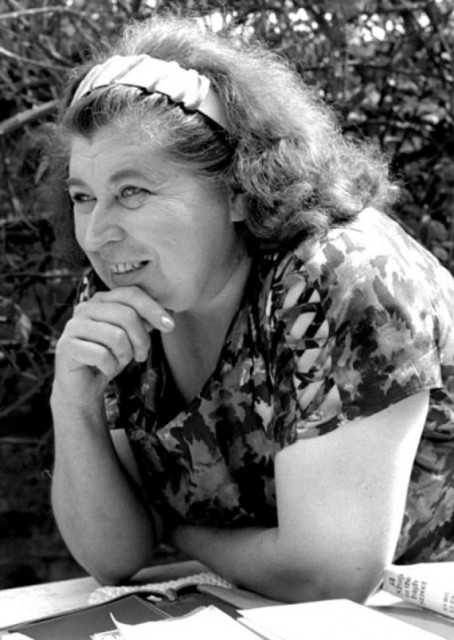
Sybil Leek remains one of the most well known names within witchcraft. Her reputation quite literally precedes her, as she was given the tagline of “Britain’s most famous witch” by BBC. As an psychic, occultist, astrologer, and witch, Sybil Leek wrote more than 60 books on the subjects, earning her a place as one of the most prolific authors of the tradition. She had an overtly eccentric personality, often wearing her trademark cape, flowy gowns, and large crystal necklaces.
Sybil was born to a middle-class family in Staffordshire, England. She claimed to have been the descendent of Molly Leigh, a woman accused of witchcraft in the 1700s whose ghost was believed to haunt the town Sybil grew up in. She maintained that her entire family descended from hidden covens throughout England and the Continent, and that she had been initiated into many of them by a young age. Sybil believed that she was able to follow her mother’s side back to Irish witches from 1134, and her father’s side back to Czarist Russian occultists. She had said that her entire family was interested in astrology and occult practices, with the likes of H.G. Wells, T. E. Lawrence, and Aleister Crowley visting her family home. The latter, when Sybil was 16, became a frequent visiter to her house, spending ample amounts of time with her walking around the countryside, instructing her in magic and encouraging her to write poetry.
After WWII and now into her late 20s, she moved to the New Forest area of England. This is the same area mentioned in several entries throughout this series that Gerald Gardner, and the likes of Dorothy Clutterbuck #37, Edith Woodford-Grimes #63, and Vivianne Crowley #41, also spent considerable amounts of time in. While here, she spent time with the New Forest gypsies, claiming to have been initiated into their group which she said had existed for over 700 years. During her time with the gypsies, she learned herbal medicine, potion making, and various other esoteric practices.
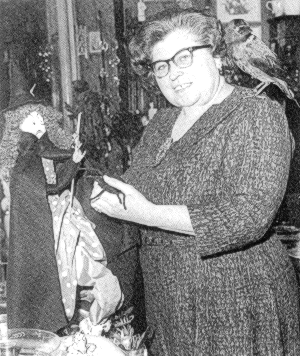
While living in the New Forest area, she opened several antique shops. As her notoriety as a witch began to grow, the townsfolk she lived around were less than enthused by the increase in publicity, tourism, and reporters sleuthing around. Some felt that Sybil was authentic, while some concluded she was a fraud who was taking advantage of the popular interest. Growing tired of the increased attention and strain it put on running her antique business, and after her landlord refused to renew her lease as a result of her notoriety, Sybil emigrated to the United States. By this time, modern witchcraft had risen in visibility and organization in England from the likes of Gerald Gardner and Alex Sanders, however, it remained in its infancy in the America. Seeing an opportunity to help it grow, Sybil decided to become a resident.
While in America, Sybil pursued Astrology as her “first love”. She published several books on the subject and was asked to go on television appearances as an expert. She traveled first to New York City but allegedly found it depressing and gloomy, particularly in the winter (she was from England, right?). Throughout the 1960s, she made several television appearances, while also giving dozens of print interviews and speaking on radio programs. Eventually, she moved to Los Angeles, where she would meet her former friend Aleister Crowley’s secretary, the famous Kabbalist and ritual magician Israel Regardie.
Sybil was notorious for her quarreling with other witches. She had dramatically differing beliefs, which she often voiced in a terse and matter of fact way. Unlike many in the modern witchcraft of the time, Sybil disapproved of ritual nudity. This put her at odds with the growing tradition of Wicca. Sybil also disapproved of ritual drug use which had been gaining acceptance throughout the 60s and 70s. She became even more of an outlier, however, in that she was an adamant and staunch supporter of hexing and cursing. This further severed her relations with mainstream witches of her time, culminating in one particular televised altercation. One of the mothers of modern witchcraft, Eleanor Bone (#46) was on a speaking tour in the United States and asked to participate in a television program as an expert on spellwork and cursing. The two were sat next to each other and exchanged a series of heated insults and diatribe. Finally, the moderator interjected, asking why Eleanor just not turn Sybil into a toad and end it. Eleanor responded in her witty way, “Why should I improve on nature”. Needless to say, Sybil was not the most popular witch in the coven.
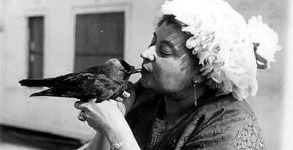
Sybil was strong in her convictions. She believed she was guided by the spirit of Madame Blavatsky (#55), and never wavered from her tradition. She was one of the early proponents of witchcraft taking up environmental causes, and spent her life writing and giving interviews on the tradition she was helping bring to light. Sybil remains one of the most notorious and infamous witches of her time. Her controversial nature is best seen through her student, Christine Jones, who described Sybil as “causing great harm as she went” in that she often “mixed truths with untruths.” While her familial claims and ancestry will never be known or proven, it is worth noting that, like her alleged ancestor Molly Leigh, Sybil also walked around with her familiar, a pet jackdaw (crow) on her shoulder that she named Mr. Hotfoot Jackson. Regardless of any negative stereotypes she may have reinforced, Sybil nevertheless helped to popularize witchcraft, along with astrology and other esoteric practices, through her tireless writing and commitment to public appearances and education.

 my-many-muse-rp-blog